9 Christmas Gifts for Sauna Lovers That Aren’t Another Bathrobe
The most useful sauna gifts do a specific job during the visit: a bench towel covers the wood, a sauna cooling towel belongs in an airy…
Journal14 min read
Learn how to activate, place, and maintain a scrotal cooling towel for real sauna relief from session one.
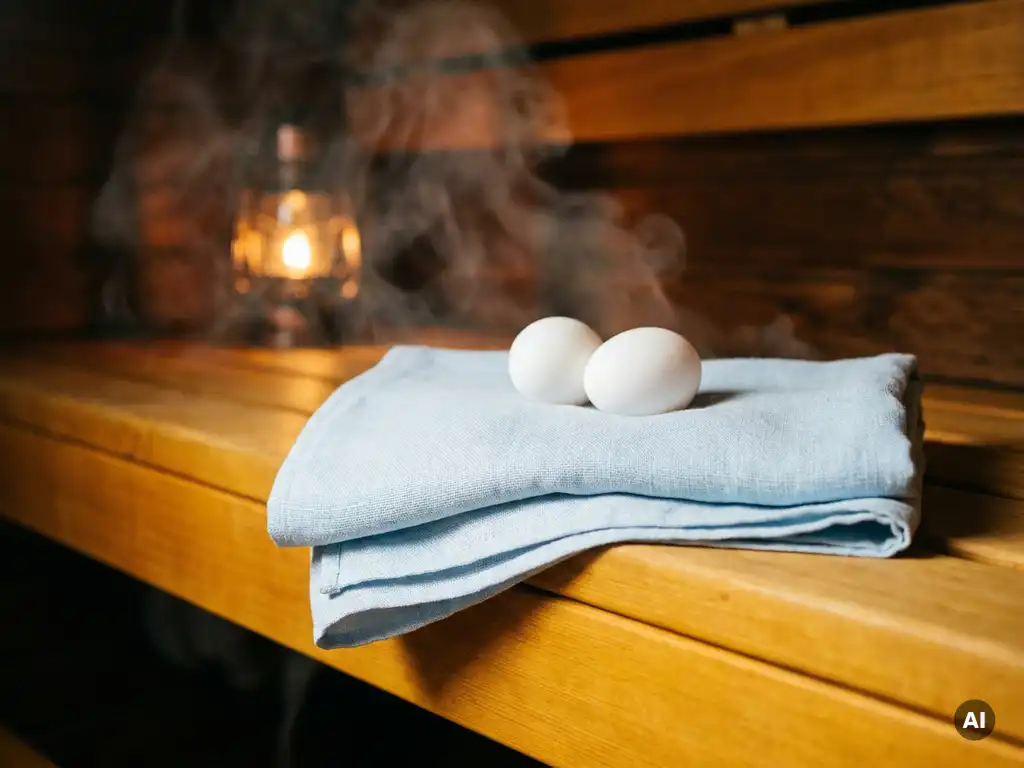
You’ve heard that heat can affect testicular function, so you picked up a scrotal cooling towel for your sauna sessions. Smart move. But if you activate it wrong, place it poorly, or skip the prep entirely, you’ll spend most of your session sitting on a warm, damp cloth that does almost nothing. That’s the reality most beginners run into, and it’s completely avoidable.
A sauna cooling towel works on a simple principle, but getting real relief from it requires understanding how evaporative cooling actually behaves in a hot, humid environment, which material you’re working with, and where to place it for maximum effect. This guide covers all of that in plain terms, so your first session is comfortable and your technique only improves from there.
Below you’ll find everything from pre-session prep and correct activation steps to mid-session timing, positioning for the groin and scrotal area, and care routines that keep your towel performing well for months. Whether you’re brand new to sauna cooling accessories or looking to sharpen your approach, this is the practical foundation you need.
Evaporative cooling works because water absorbs heat as it changes from liquid to vapour. When your cooling towel sits against your skin, moisture on the fabric surface evaporates and pulls heat away from the area beneath it. This is why a properly activated towel feels noticeably colder than the water you soaked it in. The energy required to drive evaporation comes directly from your skin, which is exactly the point. What limits this process is the air around you. If that air is already saturated with moisture, evaporation slows sharply. At around 70 to 75 percent relative humidity, you’ll notice a meaningful drop in how effective your towel feels. At 90 percent humidity, expect roughly 30 to 40 percent reduced cooling performance compared to dry conditions. In a dry Finnish sauna, this usually isn’t a problem. In a steam room or tropical outdoor environment, it very much is.
There’s also what you could call the humidity paradox. In extremely humid conditions above 85 to 90 percent relative humidity, pressing a wet towel directly against your skin can actually work against you. The towel’s moisture has nowhere to evaporate because the surrounding air is nearly saturated, so instead of drawing heat away, the damp fabric sits against your skin and blocks your body’s own sweat from evaporating. In those conditions, loose draping is more effective than direct contact. This is a counterintuitive point that most beginner guides skip entirely, but it matters if you’re using a scrotal cooling towel in a high-humidity environment or a steam sauna. Wind and airflow, on the other hand, accelerate evaporation significantly. If there’s a fan or breeze available, position your towel to take advantage of it. At high altitude, lower air pressure also speeds up evaporation, so hikers and trail runners often find cooling towels perform better than expected above 2,000 metres.
Before you activate anything, it helps to know which material you’re working with. PVA (polyvinyl alcohol) towels retain water exceptionally well, cool for longer, and are better suited to extended sessions. They need a full 30 to 60 second soak in cold water to become pliable, and they should be stored slightly damp to prevent cracking. Microfiber mesh towels activate faster with just a brief rinse, but they lose their cooling effect more quickly and need more frequent reactivation. Hybrid fabrics with phase-change material coatings store and release latent heat rather than relying purely on evaporation, which extends the peak cooling phase without requiring constant re-wetting. For scrotal cooling in the sauna, a PVA towel is generally the better starting point because it sustains cooling through a full round without needing attention.
The activation process itself is straightforward once you know the steps. Submerge the towel fully in cold or ice water for the recommended time based on its material. Remove it and wring out the excess until it’s damp but not dripping. Then snap or wave it briskly in the air several times. That snapping motion is what triggers the initial evaporative cooling effect, and skipping it is one of the most common beginner mistakes. Without it, the towel starts cool but not as cold as it could be. Other frequent errors include under-soaking (the towel stays stiff and cools poorly), over-wringing (removes too much moisture and shortens the effective window significantly), and using room-temperature water instead of cold water, which delays the onset of cooling and reduces the intensity of the first phase.
Placement before your session begins matters more than most people realise. The scrotal and inner thigh area contains a dense network of surface blood vessels that respond quickly to external temperature change, which is why a cooling towel placed there can reduce localised tissue temperature without requiring full-body cooling. For a broader systemic effect, high-vascular areas like the neck and wrists are your secondary targets. Research in thermal comfort science shows that cooling the face and neck reduces perceived exertion even when core temperature change is modest. This psychological benefit is real and measurable. Pre-cooling these areas before you enter the sauna gives your body a temperature buffer during the first few minutes of heat exposure, when your thermoregulatory response is still ramping up.
Before your first session, run through a few safety checks. If you have eczema, psoriasis, or a history of fungal skin conditions, consult a dermatologist before using a cooling towel extensively on sensitive areas. Perform a brief patch test on your inner arm if you have reactive skin. Never apply the towel to broken skin or active rashes. If you take diuretics, beta-blockers, or antihistamines, be aware that these medications can impair your body’s ability to regulate heat through sweating, which raises your risk of heat illness regardless of whether you’re using a cooling towel. Elderly individuals and those with cardiovascular conditions should treat the towel as a comfort supplement, not a primary safety measure. And know the warning signs of heat exhaustion: dizziness, nausea, stopping sweating despite the heat. A cooling towel is a preventive tool. It is not a treatment for heat stroke.
Getting your preparation right before you walk through the sauna door makes everything easier once you’re inside. Start with your towel selection. For a first sauna session, a PVA cooling towel is the more forgiving choice because it holds moisture longer and doesn’t require mid-round reactivation as frequently as microfiber mesh. Avoid standard cotton towels for cooling purposes entirely. Cotton absorbs heat from the environment and from your body, which means it warms up quickly and provides no sustained evaporative benefit. Next, locate your cold water access point before you enter. This might be a cold tap, a rinse bucket, or a small insulated container filled with ice water that you keep near the sauna entrance. Knowing exactly where you’ll reactivate your towel between rounds removes one source of uncertainty during the session itself.
Pre-soak your towel before entering the sauna, not after you sit down. This is the single most consequential beginner mistake and it’s easy to avoid. A dry or inadequately soaked towel provides no meaningful cooling and can feel uncomfortably warm within the first few minutes of a round. Submerge the towel fully in cold or ice water for at least 30 seconds for microfiber mesh, or up to two to three minutes for PVA. Wring it to a damp but not dripping state, then snap it in the air to initiate evaporative cooling. Test it briefly against your inner wrist. It should feel noticeably cool, not just slightly less warm than the air. If it doesn’t, it needs more soaking or a colder water source. Walk in with the towel already at full cooling capacity so you’re not waiting for it to work.
Choose your bench position deliberately. In a traditional Finnish sauna, lower benches sit at cooler ambient temperatures because heat rises. For your first session, start on the lowest bench and move up only as your tolerance builds over multiple visits. Keep your planned session length realistic: eight to twelve minutes per round is a sensible beginner target. Know the heat level you’re entering. Finnish dry saunas typically run between 80 and 100 degrees Celsius. Infrared saunas operate at 45 to 60 degrees and are generally more manageable for first-timers. Before you go in, drink at least 500ml of water in the 30 to 60 minutes prior. Avoid entering immediately after a heavy meal because digestion and thermoregulation compete for the same physiological resources. Remove metal jewellery, which retains heat and can cause burns in high-temperature environments.
If you have any cardiovascular condition, hypertension, or circulatory disorder, get medical clearance before using a sauna. The cooling towel reduces skin surface temperature but does not reduce the cardiovascular load that a hot sauna places on your heart. If you’re on medications that affect fluid balance or sweating, speak to your healthcare provider before combining sauna use with those medications. For anyone with no prior sauna experience, pairing with someone who knows the environment for your first session is a genuinely good idea. Keep that first session to a single short round with a full cooling break afterward, assess how you feel, and build from there. The cooling towel is a useful comfort and safety supplement, but it doesn’t change the basic rule: exit the sauna if you feel dizzy, nauseous, or unwell, regardless of how cool the towel feels.
Correct placement is where most of the practical value of a scrotal cooling towel is either realised or lost. A well-activated towel placed ineffectively will warm within minutes and provide minimal sustained relief. The goal in a seated sauna session is to maximise cool contact with the scrotal and inner thigh area, where surface blood vessels respond quickly to external temperature change. Fold the towel lengthwise into thirds to create a long, moderately thick strip. This gives you good coverage without excessive bulk. If you want broader contact across the inner thighs, fold into halves instead. Avoid folding into a tight square. A tight square concentrates cooling in a small area, warms faster, and misses the vascular zones on either side.
Place the folded towel across your lap before you sit fully, with the central section positioned over the scrotal area. Let the towel’s own weight and your seated position hold it in place. No additional securing is needed. The ends should extend slightly onto both inner thighs for broader vascular coverage. The towel should feel cool with light contact. Do not press it tightly against the skin. Tight contact restricts airflow across the towel’s surface, which is what drives evaporation. If you trap the towel between skin and clothing or under a heavy outer towel, you’re blocking the very process that makes it work. On a narrow bench, fold the towel slightly narrower so the ends don’t hang off the edge and drip. On a wider bench, you have more room to drape generously.
If the towel shifts during the session, lift it slightly and resettle it. That brief exposure to air actually refreshes the evaporative surface and gives you a small cooling boost before you replace it. If one area feels warmer than another, unfold and refold to redistribute moisture more evenly, or rotate the towel 180 degrees to bring a less-evaporated section into contact with your skin. If you find sustained wet contact on sensitive skin uncomfortable, switch to loose draping rather than direct contact. Loose draping still delivers evaporative cooling benefit because the moisture evaporates from the fabric surface regardless of whether it’s pressed against the skin. This approach also aligns with the guidance for high-humidity environments where direct contact can impede your body’s own sweat evaporation. The towel doesn’t need to be pressed against you to work. It needs airflow and moisture, and your body provides the heat.
Every cooling towel goes through three phases during a sauna round. The peak cooling phase lasts roughly the first five to ten minutes after activation, depending on your towel material and the sauna temperature. Evaporation is fastest during this window and the cooling sensation is most pronounced. After that, the declining cooling phase begins as surface moisture reduces and the remaining water approaches ambient temperature. Finally, the warm phase arrives: the towel is largely dry or has warmed to match the sauna air, and it provides no meaningful cooling. In some cases it may feel slightly warm against the skin. Recognising these phases lets you time your reactivation correctly rather than sitting through the warm phase without realising the towel has stopped working.
PVA towels sustain the peak phase longer than microfiber mesh, making them better suited to a standard ten to twelve minute sauna round without mid-session reactivation. Microfiber mesh moves through the phases more quickly but reactivates faster during cooling breaks. As a practical guideline, plan to reactivate microfiber mesh towels at around seven to eight minutes in a dry sauna, and PVA towels at around ten to twelve minutes. In an infrared sauna at lower temperatures, PVA towels can last twelve to fifteen minutes before needing reactivation. The clearest signal that it’s time is simple: the towel feels neutral or warm rather than cool. If you press it briefly against your inner wrist and feel no cooling sensation, it’s done. A noticeable increase in heat discomfort despite the towel being in place is another reliable cue.
For a multi-round session, the cooling break between rounds is your primary reactivation point. Bring the towel to your cold water source, re-soak for 30 to 60 seconds, wring to damp, snap to reactivate, and re-enter the next round at full capacity. During the break itself, apply the towel to your neck or wrists to accelerate recovery between rounds. If you’re planning an extended session, consider a two-towel rotation: one in use inside, one stored in an insulated container with ice water outside. Swap at each cooling break so the towel you carry in is always at maximum cooling capacity. Over weeks of regular sauna use, you may find your towel stays effective for longer as your body’s sweating mechanism becomes more efficient with heat acclimatisation. That’s a sign your thermoregulatory system is adapting well, and it’s worth adjusting your reactivation schedule accordingly.
Rinse your cooling towel under cool running water immediately after every session without exception. In the sauna context, the towel has been in contact with sweat-exposed skin in a warm, moist environment, which creates ideal conditions for bacterial and fungal growth if you delay cleaning. Work the fabric gently between your hands during rinsing to release trapped particles. For PVA towels, rinse until the water runs clear. Residual sweat left in PVA material accelerates degradation of the polymer structure. Avoid hot water for rinsing because heat begins to break down PVA and can cause microfiber mesh to lose structural integrity over time. After rinsing, PVA towels should be stored slightly damp in their case or pouch to prevent the material from drying out and cracking. Microfiber mesh towels should air-dry fully before storage to prevent mildew.
Wash the towel after every single use. This is especially important given that it contacts the scrotal area, which has a high density of sweat glands and sits in a warm, enclosed microenvironment during a sauna session. Hand washing in cool water with a mild, fragrance-free detergent is the safest method for both material types. If you machine wash, use a cold or delicate cycle and avoid high-spin settings. One of the most common and least-known care mistakes is using fabric softener. Fabric softeners coat the fiber surface and significantly reduce moisture-wicking and evaporative cooling performance. Avoid bleach and chlorine-based products, which degrade both PVA polymer chains and microfiber weave structures. Don’t wash microfiber towels with heavy cotton items that generate lint, as lint embeds in the mesh and reduces the evaporative surface area over time.
Synthetic cooling towels shed microplastic fibers during washing, particularly during machine cycles. These particles pass through standard wastewater filtration and enter aquatic ecosystems. Using a microplastic-catching laundry bag during machine washing significantly reduces fiber release. Hand washing releases fewer microplastics than machine washing, which is another practical reason to favour it for routine cleaning. If you’re considering alternatives, bamboo-blend cooling towels offer improved biodegradability and reduced microplastic shedding, though they typically provide shorter cooling duration and lower water retention than PVA. Organic cotton versions with moisture-wicking treatments are another option with a lower environmental footprint, though cooling performance is more limited. A higher-quality towel that lasts three to five years with proper care may have a lower total environmental impact than a cheaper one replaced every year.
Replace your towel when you notice persistent odour after thorough washing, which indicates bacterial colonisation the fabric can no longer shed through cleaning. PVA towels that crack, stiffen, or no longer return to a pliable state after soaking have reached the end of their useful life. Microfiber mesh that feels rough, pills, or no longer absorbs water readily has lost its fiber integrity. Any discolouration that doesn’t wash out, or visible mould spots, means immediate replacement regardless of the towel’s apparent structural condition. Regular care extends the life of a quality towel considerably, so the post-session rinse and correct drying routine aren’t just hygiene steps. They’re also the most practical way to protect your investment and maintain consistent cooling performance across every session.
Using a scrotal cooling towel effectively in the sauna comes down to a handful of decisions made before you even sit down: choosing the right material, activating it correctly in cold water, understanding how humidity affects performance, and placing it where it actually delivers cooling to vascular tissue. Get those steps right and the towel works. Skip them and you’re managing a warm, damp cloth for most of your round. The humidity paradox, the three-phase cooling lifecycle, the difference between PVA and microfiber mesh, the case for loose draping in high-humidity conditions: these aren’t minor details. They’re the difference between a tool that genuinely supports your sauna practice and one that sits unused after the second session.
Start with one session, one towel, and the pre-soak habit. Build your reactivation routine into your cooling breaks. Wash the towel after every use. Pay attention to how your body responds as your heat tolerance builds over time. If you found this guide useful, share it with someone who’s just getting started with sauna cooling accessories, or revisit the timing and care sections before your next session. The goal is a practice that’s comfortable, consistent, and sustainable, and the right technique from the beginning makes all of that considerably easier to achieve.

The most useful sauna gifts do a specific job during the visit: a bench towel covers the wood, a sauna cooling towel belongs in an airy…

A useful sauna gift box has a few items with different jobs: coverage or comfort during a session, then a sauna cooling towel for breaks if…