9 Christmas Gifts for Sauna Lovers That Aren’t Another Bathrobe
The most useful sauna gifts do a specific job during the visit: a bench towel covers the wood, a sauna cooling towel belongs in an airy…
Journal5 min read
Keep your sauna cooling towel damp and your gym bag dry with five simple, practical steps.
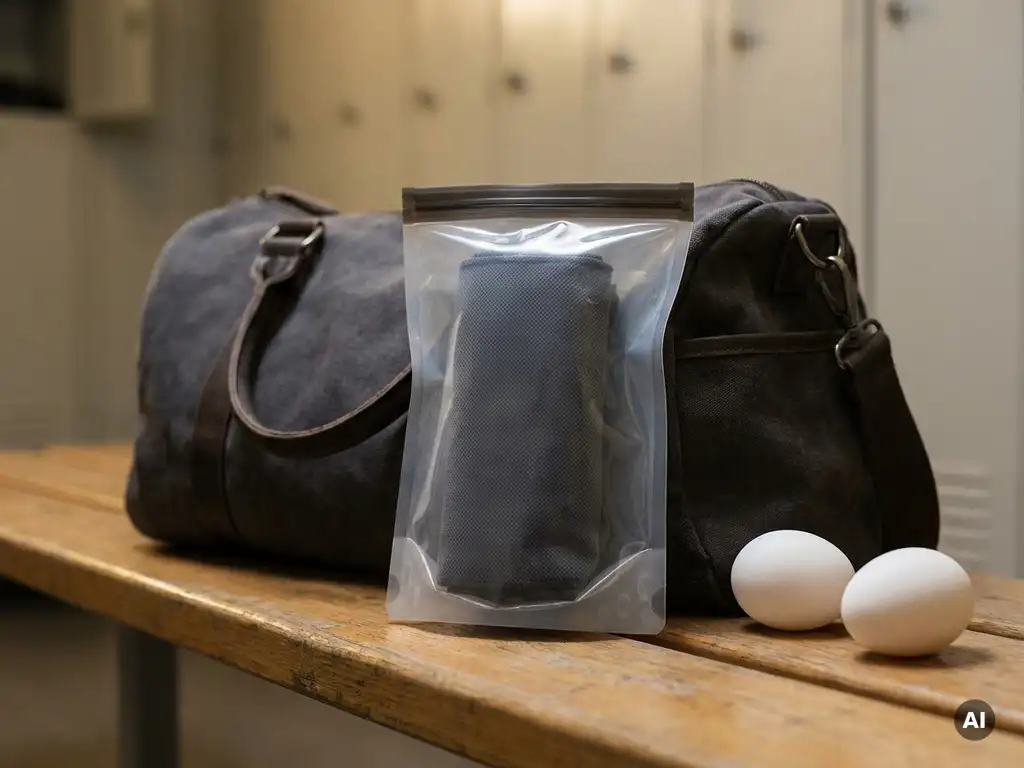
Getting your sauna cooling towel from home to the sauna bench without turning your bag into a swamp is one of those small problems that has a straightforward fix once you know what you are doing. Whether you are heading to a public sauna, a gym facility, or a friend’s outdoor barrel sauna, the goal is the same: arrive with a towel that is damp enough to work, contained enough not to soak everything around it, and ready to place where it counts.
This guide walks you through exactly how to transport a cooling towel to the sauna in five practical steps, from prep to pack to post-session storage.
Before you touch the towel, gather the right materials. Improvising with a carrier that was not designed for wet items is the most common reason bags get soaked. Having the right kit ready takes thirty seconds and saves you the frustration of arriving with a wet phone and a damp wallet.
You do not need anything elaborate. A reusable silicone zip bag, a dry bag from an outdoor shop, or a quality zip-lock bag all work well. The key requirement is a seal that holds under pressure if the bag gets compressed inside your gym bag or backpack. If you are unsure whether your container seals properly, test it with water at home before your first trip.
Soak your cooling towel in cold or cool water before you leave home. Once it is fully saturated, the wringing stage is where most people either under-do it or skip it entirely, and that is what leads to leaks. The towel should be damp and ready to use, not dripping.
After wringing, the towel should feel cool and uniformly damp across its surface. If one section feels noticeably wetter than another, twist that section a little more before packing. A well-wrung towel will stay usable for the duration of a typical sauna session without needing to be re-soaked, and it will travel without leaking if packed correctly in the next step.
With the towel prepped, your choice of container determines whether the rest of your bag stays dry. This is the step that matters most for how to transport a cooling towel without incident, and it is worth making a deliberate choice rather than grabbing whatever is nearby.
The best options, roughly in order of reliability:
Avoid knotted plastic bags, open containers, or anything that relies on friction alone to stay closed. Compression inside a packed bag will force moisture out of any gap. Once you have your container, move on to packing it correctly within your main bag.
Even with a good container, placement inside your bag matters. Place the sealed wet bag in a position where it is unlikely to be crushed by heavier items, which can stress the seal and push moisture through any weak point.
Once packed, give the bag a gentle squeeze from the outside to check that nothing is pressing directly on the wet bag’s seal. If you can feel the wet bag being compressed, rearrange the contents before you leave. This thirty-second check is the difference between arriving with dry kit and spending the session annoyed about a damp phone.
After your sauna session, the towel has done its job and picked up sweat, heat, and potentially sauna oil residue from the bench. Sealing it back into the wet bag for the journey home is fine, but leaving it sealed for hours after you get back is where mildew and odour problems start. Good sauna cooling towel hygiene means airing it out promptly.
If you notice any smell developing despite airing it out, that is usually a sign the towel needs a wash. Follow the care instructions for your specific towel, and avoid fabric softener, which can coat the fibres and reduce the towel’s ability to hold and release moisture evenly. A clean, dry towel stored correctly will be ready to prep and pack again for your next session without any issues.

The most useful sauna gifts do a specific job during the visit: a bench towel covers the wood, a sauna cooling towel belongs in an airy…

A useful sauna gift box has a few items with different jobs: coverage or comfort during a session, then a sauna cooling towel for breaks if…