9 Christmas Gifts for Sauna Lovers That Aren’t Another Bathrobe
The most useful sauna gifts do a specific job during the visit: a bench towel covers the wood, a sauna cooling towel belongs in an airy…
Journal5 min read
Fabric softener silently ruins cooling towels. Learn what to avoid and how to wash them correctly.
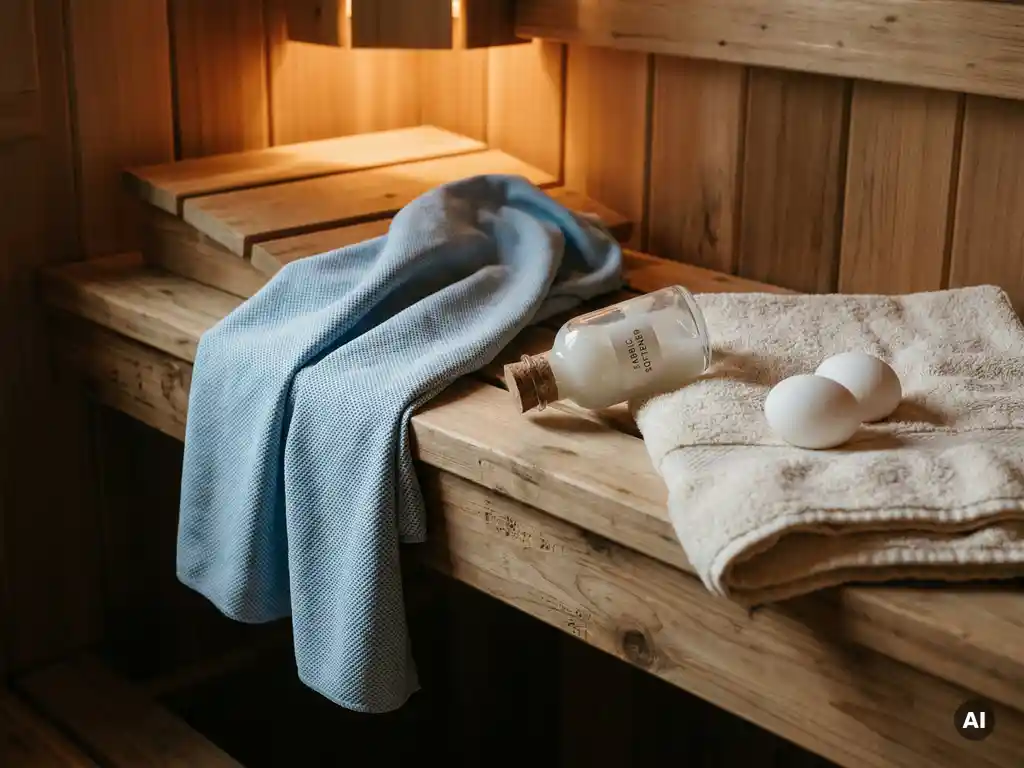
Washing a cooling towel sounds straightforward, but a few common mistakes can quietly destroy the properties that make it work. Fabric softener is the biggest offender, and it is far from the only one. If your sauna cooling towel has stopped feeling as cool or refreshing as it once did, the laundry routine is usually where things went wrong.
This guide walks you through exactly how to wash, dry, and maintain your cooling towel so it keeps performing the way it should, session after session.
Before you run any wash cycle, find the care label on your cooling towel and read it completely. Cooling towels are made from a range of materials, including microfibre blends, PVA (polyvinyl alcohol), and evaporative mesh fabrics, and each one responds differently to heat, detergent, and mechanical agitation. What works perfectly for one material can permanently damage another.
Look for the following on the label:
Keep the label in mind as you work through the steps below. The guidance here applies to most performance cooling towels, but your care label always takes priority. If the label and this guide conflict, follow the label.
Fabric softener is the single most common reason cooling towels lose their effectiveness. The way softener works is by coating individual fibres with a thin layer of lubricating chemicals, which is what gives treated laundry that soft, smooth feel. For a standard bath towel, this is largely harmless. For a cooling towel, it is a serious problem.
Cooling towels rely on their fabric’s ability to absorb water quickly, hold moisture evenly, and allow evaporation across the surface. Fabric softener blocks all three of these functions. The coating reduces the fabric’s absorbency, disrupts the capillary action that spreads moisture through the material, and slows evaporation. After just one or two washes with softener, you may notice your towel takes longer to activate, feels less cool against the skin, or dries out faster than it used to. Over repeated washes, the damage compounds and the towel may never fully recover its original performance.
The same logic applies to dryer sheets, which deposit a similar coating during the drying cycle. Skip both entirely when washing any performance cooling fabric.
With fabric softener ruled out, your next decision is which detergent to use. The goal is something that cleans effectively without leaving residue or degrading the fabric’s technical properties.
Follow these guidelines when selecting a detergent for your sauna cooling towel:
After washing with the correct detergent, your towel should rinse cleanly with no soapy residue. If it still feels slightly slick or soapy after the cycle finishes, run an additional rinse to clear any remaining detergent before drying.
With your detergent chosen, the next step is selecting the right wash settings. High temperatures and aggressive spin cycles are the two most common mechanical causes of cooling towel damage, and both are easy to avoid once you know what to look for.
If your care label recommends hand washing, fill a basin with cool or lukewarm water, add a small amount of performance detergent, and gently work the towel through the water without wringing or twisting it. Rinse thoroughly under cool running water until the water runs clear.
Drying is where a lot of otherwise well-washed cooling towels are damaged. Heat is the main risk, and it applies both to tumble dryers and to direct sunlight over extended periods.
For most cooling towels, air drying is the safest and most effective method:
Once fully dry, your cooling towel should feel light and slightly textured, ready to absorb water and activate quickly at your next sauna session. If it feels stiff, unusually rough, or has lost its flexibility, check whether the drying temperature was too high or whether detergent residue has built up over multiple washes. A cool rinse cycle with no detergent can sometimes restore softness without affecting performance.
Store your towel loosely folded or rolled in a dry, breathable bag between sessions. Avoid sealing it in an airtight container while even slightly damp, as trapped moisture creates the conditions for mildew, which is difficult to remove fully once it has set into the fabric.

The most useful sauna gifts do a specific job during the visit: a bench towel covers the wood, a sauna cooling towel belongs in an airy…

A useful sauna gift box has a few items with different jobs: coverage or comfort during a session, then a sauna cooling towel for breaks if…