How to read a sauna study without the headlines
The research on heat and sperm is real. It's also smaller and more specific than most headlines suggest.
Journal4 min read
Why the part you sit on and the part you wet are woven differently.
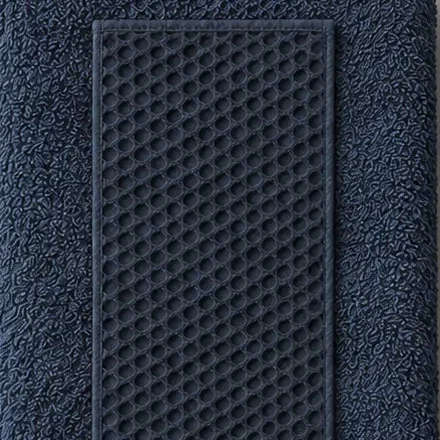
Most sauna towels are one fabric from end to end. Ours has two, because it has two jobs.
The base is 100% cotton terry at 400 g/m². Terry is woven with loops on the surface, and those loops are what make a towel absorbent and soft. On a sauna bench you want exactly that: something that takes up sweat, sits comfortably on hot wood and doesn't slide around.
The panel is a 3D honeycomb weave of 60% lyocell and 40% cotton at 280 g/m². Lyocell is a fibre made from wood pulp and it takes up moisture well. The honeycomb cells give the water somewhere to sit, and the open structure lets air reach it.
It's also flatter and lighter than the terry around it, so you can find it with your hand without looking down.
That depends on the room. Water evaporating from the panel takes heat with it, and how fast that happens depends on the temperature, the humidity, the air moving around you, and how much water you used. In a dry, very hot sauna the panel will dry faster than in a softer, steamier one.
We haven't published a cooling figure because we haven't measured one under controlled conditions yet. When we do, we'll publish the method along with the number.
The research on heat and sperm is real. It's also smaller and more specific than most headlines suggest.
Timers and leaderboards miss the point. Here's how we think about rounds.