9 Christmas Gifts for Sauna Lovers That Aren’t Another Bathrobe
The most useful sauna gifts do a specific job during the visit: a bench towel covers the wood, a sauna cooling towel belongs in an airy…
Journal5 min read
Sauna cooling towels wear out quietly. Here are the signs that yours needs replacing before your next session.
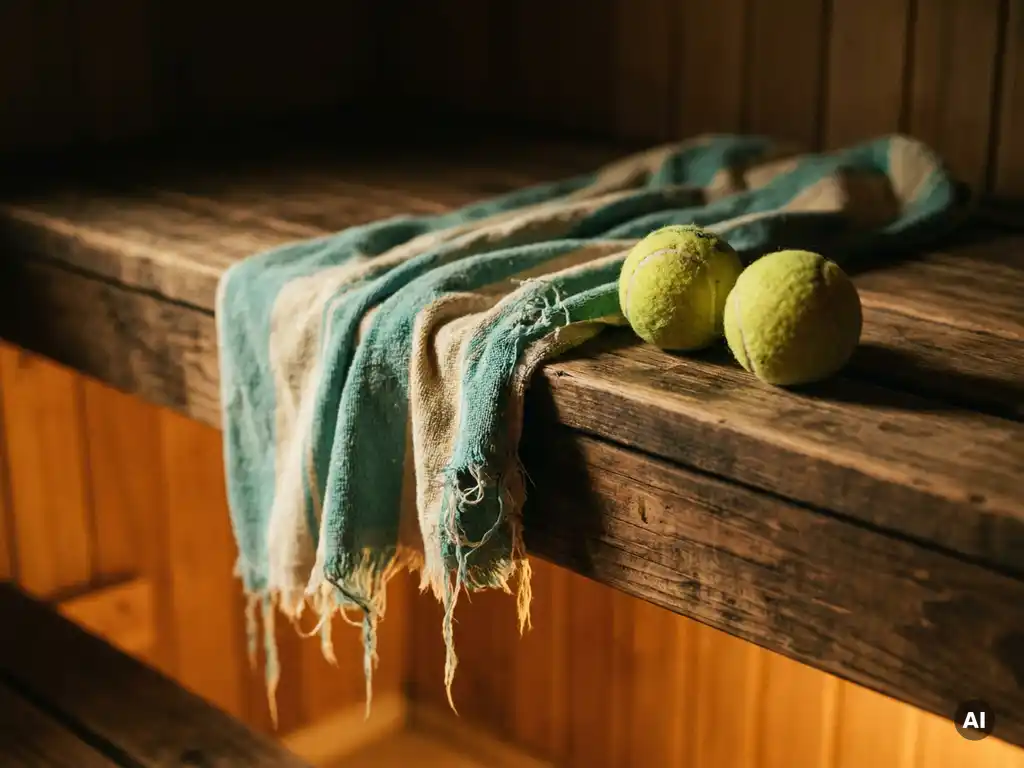
A sauna cooling towel is a simple tool, but like any piece of kit you rely on
regularly, it does not last forever. Whether you use yours every week or just
on occasion, the materials gradually change in ways that affect how well the
towel actually does its job. Knowing when to replace your sauna
cooling towel saves you from a frustrating session where the cooling
effect just is not there when you need it.
This guide walks through what happens to a cooling towel over time, the signs
that tell you it is past its best, how long you can reasonably expect it to
last, and a few habits that will stretch its lifespan before you need to reach
for a replacement.
Cooling towels work through evaporative cooling. When the
fabric is wet and placed against the skin, moisture evaporates and draws heat
away from the body. For a groin cooling towel used in a sauna, this mechanism
is especially important because the goal is to offset the intense ambient heat
that builds up during a session. That process depends entirely on the fabric
being able to absorb water efficiently and release it steadily.
With repeated use, the fibres in the towel begin to break down. Several
factors contribute to this gradual decline:
Over time, these factors reduce the fabric’s ability to hold and release
moisture evenly. The towel may still feel damp, but the cooling effect
becomes noticeably weaker because the evaporation is no longer
working at full capacity.
Heat exposure compounds this. Sauna environments are harsh on
textiles. The repeated cycle of intense heat followed by rinsing and drying
accelerates fibre degradation faster than standard room-temperature use would.
A cooling towel used in the sauna several times a week will wear out faster
than one used occasionally, simply because the conditions are more demanding.
There are a handful of reliable indicators that your cooling towel has reached
the end of its useful life. The most obvious is a drop in cooling
performance. If you wet the towel, wring it out, and place it against
your groin during a sauna session but feel little to no cooling effect within
the first minute or two, the fabric is likely no longer evaporating moisture
efficiently.
Look out for these specific warning signs:
Any one of these signs on its own warrants close attention. If you notice
two or more together, it is a strong signal that the towel is
no longer performing as intended and should be replaced.
There is no single fixed answer because replacement frequency depends on how
often you use the towel, how you care for it, and the quality of the material.
That said, a practical rule of thumb for regular sauna users is to
assess the towel every six to twelve months and replace it
when performance visibly declines.
If you use a sauna cooling towel two or three times a week, you are putting it
through more stress than someone who visits the sauna once a fortnight:
The key is not to rely on a fixed calendar date but to pay attention to how
the towel actually performs during sessions.
It is also worth considering hygiene alongside performance.
Even if the towel still feels reasonably effective, a towel used regularly in
a warm, humid environment accumulates bacteria over time. If thorough washing
no longer fully eliminates odour, replacing the towel is the right call
regardless of how it looks.
Good care habits make a meaningful difference to how long your cooling towel
stays effective. The single most important step is rinsing the towel
thoroughly after every use. Sauna sweat, body oils, and mineral
residue from water all degrade the fabric if left to sit. A quick rinse under
clean water immediately after your session removes most of this before it has
a chance to set.
When it comes to washing, keep it simple. Mild detergent and cool or
lukewarm water are gentler on the fibres than hot washes or harsh
chemicals. Avoid fabric softeners entirely. They coat the
fibres and reduce the towel’s ability to absorb and release moisture, which
directly undermines the cooling function.
Drying matters too. Air drying in a well-ventilated spot is
preferable to tumble drying. High heat in a dryer accelerates fibre breakdown,
which is counterproductive given that the towel already faces plenty of heat
during sauna sessions. Store the towel dry and flat or loosely
rolled rather than folded tightly, which can crease and stress the
material over time.
Keeping a spare cooling towel on hand is a practical move for regular sauna
visitors. Rotating between two towels gives each one time to
dry completely between uses, which reduces the risk of mildew and extends the
lifespan of both. When one eventually shows signs of wear, you already have a
replacement ready and can continue your routine without interruption.

The most useful sauna gifts do a specific job during the visit: a bench towel covers the wood, a sauna cooling towel belongs in an airy…

A useful sauna gift box has a few items with different jobs: coverage or comfort during a session, then a sauna cooling towel for breaks if…