9 Christmas Gifts for Sauna Lovers That Aren’t Another Bathrobe
The most useful sauna gifts do a specific job during the visit: a bench towel covers the wood, a sauna cooling towel belongs in an airy…
Journal6 min read
Sauna towels smell after washing due to biofilm and bacteria. Here is how to fix it for good.
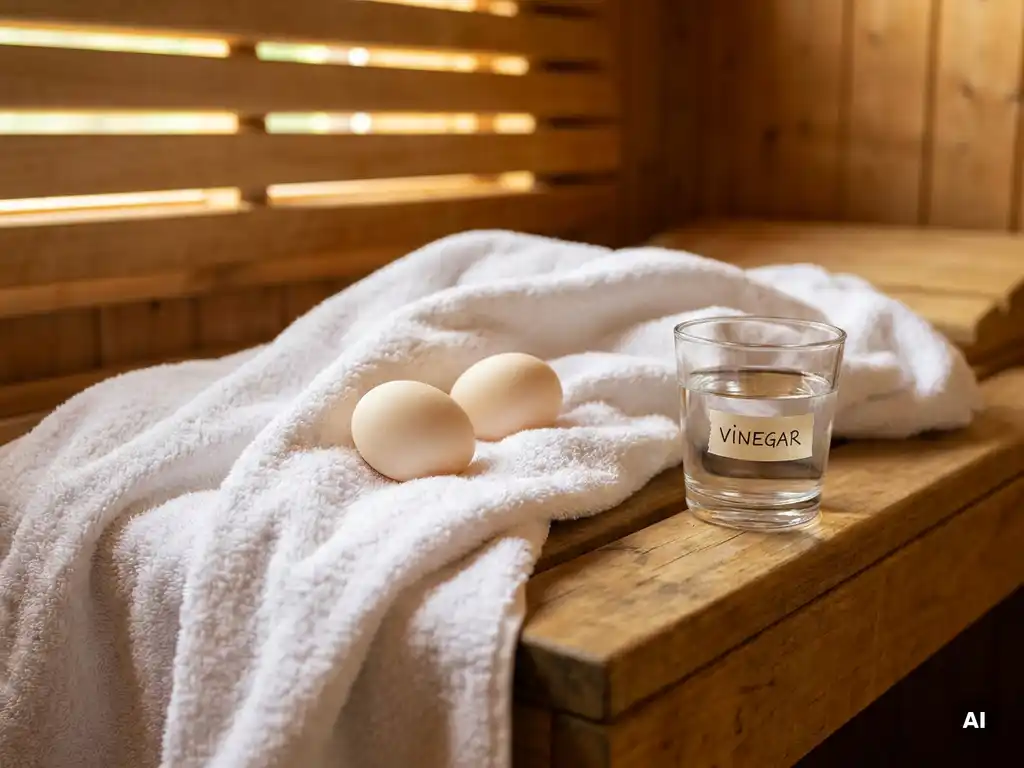
If your sauna towel still smells musty after a wash, you are not alone and
you are probably not doing anything obviously wrong. The problem is more
common than most people expect, and it tends to get worse over time rather
than better. Understanding why it happens is the first step to actually
fixing it, rather than just masking the odor with
detergent fragrance that fades within a day.
This is especially relevant if you use a sauna cooling towel
for targeted groin cooling during sessions. Towels used in that area are
exposed to more body heat, sweat, and skin contact than a
standard bath towel, which means odor-causing buildup accumulates faster.
Getting your care routine right keeps the towel performing well and feeling
genuinely clean every time you use it.
The smell is almost never about the wash itself failing to clean. It is about
what is left behind in the fabric after the wash cycle ends. Towels develop a
persistent odor because of a combination of:
Bacteria thrive in warm, damp environments, and a towel used in a sauna
setting provides exactly that. Each time you use the towel,
sweat, dead skin cells, and natural oils transfer into the
fabric. When the towel is then left damp or stored in a bag, bacteria multiply
rapidly. Over time, these bacteria produce compounds that have a distinct sour
or musty smell, and those compounds bond to the fibers in a way that a
standard short wash cycle does not fully remove.
Mildew is a secondary problem that compounds the first. If a
towel sits even slightly damp for more than a few hours, mildew spores begin
to colonize the surface. The smell mildew produces is the classic “wet dog” or
musty odor that many people mistake for a washing machine problem. The machine
is usually fine. The issue is that the towel was not dried thoroughly before
the smell was already developing.
Biofilm is the least visible but often the most persistent
cause. It is a thin layer of organic residue and detergent buildup that coats
the fibers and traps bacteria inside. Once biofilm establishes itself, regular
detergent does not penetrate it effectively, which is why the towel smells
fresh for a few hours after washing and then returns to the same sour odor
once it warms up against your skin.
Certain common washing habits actively encourage the buildup described above,
even when people are washing their towels regularly. The most significant
culprit is using too much detergent. It feels
counterintuitive, but excess detergent leaves a residue in the fabric that
feeds bacteria and contributes directly to biofilm formation. Less detergent,
used correctly, cleans more effectively.
Washing at too low a temperature is another frequent issue.
Cold washes are better for the environment and for some fabrics, but they do
not kill the bacteria embedded in towel fibers. For towels used in
high-sweat contexts like sauna sessions, a warmer wash is more effective at
breaking down organic residue. Check the care label on your specific towel,
but if it tolerates a higher temperature, use it.
Fabric softener is one of the most damaging things you can
use on a towel you want to keep clean and odor-free. It coats the fibers with
a waxy substance that:
If your towel has been softener-treated for a long time, that coating is
likely contributing significantly to the persistent smell.
Leaving a wet towel in the washing machine drum or stuffed into a gym bag
after a sauna session is one of the fastest ways to develop a smell that is
very difficult to remove. Even an hour of sitting damp in a
warm environment can be enough for mildew to begin. This is a particularly
easy mistake to make when you are packing up after a sauna visit.
Eliminating deep-set odor requires a reset wash that strips
the biofilm and kills the bacteria, followed by a consistent routine that
prevents them from returning. The most reliable reset method is a
hot wash with white vinegar added to the drum in place of
detergent. Vinegar is acidic enough to break down biofilm and neutralize
bacterial odor compounds without leaving a residue of its own.
Follow these steps for the two-stage reset wash:
Do not combine vinegar and detergent in the same wash, as they neutralize each
other and reduce the effectiveness of both. After this two-stage wash, the
towel should come out genuinely odor-free rather than just
fragrance-masked.
If you do not have white vinegar or prefer not to use it,
baking soda works through a different mechanism. Add half a
cup directly to the drum before a hot wash. Baking soda is alkaline and:
Like vinegar, use it in place of detergent rather than alongside it.
Once the towel is clean, drying it in direct sunlight is one
of the most effective ongoing maintenance steps available. UV light kills
surface bacteria naturally, and the open air prevents any residual moisture
from encouraging mildew.
If outdoor drying is not practical, a
well-ventilated room with airflow is the next best option.
Avoid folding or storing the towel until it is
completely dry throughout, not just dry on the surface.
Maintaining freshness between sessions is mostly about managing
moisture and airflow in the hours after use. The moment you
finish your sauna session, hang the towel somewhere it can air out rather than
folding it or putting it in a bag. Even a few minutes of airflow before
packing it away makes a meaningful difference.
If you carry your cooling towel in a kit bag or backpack, consider these
simple habits:
For a men’s sauna cooling towel used specifically around the
groin, washing after every session is genuinely worth the
effort. The skin in that area produces more sweat and heat than many other
parts of the body, and towels used there pick up more organic residue per use
than a towel used to dry your hands or sit on a bench. Treating it with the
same care as athletic gear rather than standard household
linen will keep it performing well and smelling clean session after session.

The most useful sauna gifts do a specific job during the visit: a bench towel covers the wood, a sauna cooling towel belongs in an airy…

A useful sauna gift box has a few items with different jobs: coverage or comfort during a session, then a sauna cooling towel for breaks if…